


Grounds for Divorce
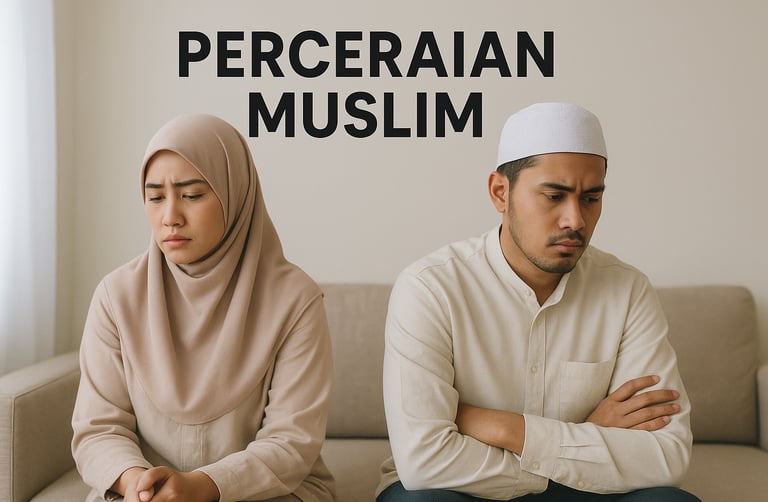
Marital conflicts may sometimes be resolved through communication between the spouses. However, where the conflict can no longer be resolved amicably, the matter may proceed through the court, and the marriage may legally end following a court decision.
Under Article 39 paragraph (2) of Law No. 1 of 1974 concerning Marriage, as amended by Law No. 16 of 2019, grounds for divorce include:
One of the parties has committed adultery;
One of the parties has abandoned the other for 2 consecutive years without permission or a valid reason;
One of the parties has been sentenced to imprisonment for 5 years or more after the marriage;
One of the parties has committed cruelty or severe mistreatment;
One of the parties has a physical disability or illness that prevents them from fulfilling their obligations as a spouse; and
There are continuous disputes and conflicts between the spouses, with no reasonable expectation that they can live together harmoniously.
For Muslim couples, additional grounds for divorce may include:
The husband has violated a taklik-talak undertaking; and
One of the spouses has renounced Islam (apostasy) in circumstances that result in marital disharmony.
Legal Consequences of Divorce
Divorce may have legal consequences concerning child custody, child support, and marital property.
Child Custody
Under Article 105 of the Compilation of Islamic Law (KHI), custody of a child who has not yet reached the age of 12 is generally entrusted to the mother.
Once the child reaches an age at which they are legally able to make a choice, the child may choose whether to remain under the custody of the father or the mother, subject to the applicable legal considerations.
Child Support
The father remains responsible for the costs of the child's care and education.
If the father is genuinely unable to fulfill this obligation, the court may determine that the mother also bears part of the financial responsibility, in accordance with the applicable law.
Marital Property
Marital property acquired during the marriage may be subject to division following divorce in accordance with the applicable Indonesian laws and regulations.
The page refers to Article 119 of the Indonesian Civil Code (KUHPerdata) and the Marriage Law in relation to marital property.
Jurisdiction for Muslim Divorce Proceedings
For Muslim divorce proceedings, jurisdiction generally follows the applicable rules governing the Religious Court (Pengadilan Agama).
The divorce case is generally filed with the court having jurisdiction over the area where the wife resides.
The relevant address is not necessarily required to be the same as the address stated on the Indonesian identity card (KTP); the court's jurisdiction may be determined based on the party's actual place of residence in accordance with the applicable procedural rules.
A divorce judgment may have declaratory, constitutive, and condemnatory characteristics, depending on the relief granted and the legal consequences established by the court.
How Lawyers Can Assist with Muslim Divorce
A lawyer may assist clients throughout Muslim divorce proceedings, including matters concerning the legal rights arising from the divorce.
1. Legal Advocacy
Advocating for the client's legal rights and interests, including matters concerning:
Child custody;
Child support; and
Marital property.
2. Legal Representation
Providing legal assistance and representation throughout divorce proceedings to help clients pursue and obtain their legal rights.
3. Legal Research
Conducting legal research and reviewing relevant legal materials, including:
The Marriage Law;
Government Regulations; and
The Compilation of Islamic Law (KHI).
4. Preparation of Divorce Claims and Documents
Assisting with the preparation of divorce claims, applications, and other legal documents based on:
Law No. 1 of 1974 concerning Marriage;
Government Regulation No. 9 of 1975 concerning the Implementation of Law No. 1 of 1974 concerning Marriage; and
Compilation of Islamic Law (KHI) for Muslim parties.
5. Legal Advice
Providing legal advice within the scope of the applicable laws and regulations concerning the rights and legal consequences arising from divorce.
6. Protection of Legal Rights
Ensuring that the client's legal rights and interests are properly addressed in accordance with:
Law No. 1 of 1974 concerning Marriage, as amended by Law No. 16 of 2019;
Government Regulation No. 9 of 1975 concerning the Implementation of Law No. 1 of 1974 concerning Marriage; and
Compilation of Islamic Law (KHI) for Muslim parties.
Legal Basis
Law No. 1 of 1974 concerning Marriage, as amended by Law No. 16 of 2019 concerning Amendments to Law No. 1 of 1974 concerning Marriage
Presidential Instruction No. 1 of 1991 concerning the Dissemination of the Compilation of Islamic Law (KHI)
Government Regulation No. 9 of 1975 concerning the Implementation of Law No. 1 of 1974 concerning Marriage
Family Law Legal Consultants
Navigating an international marriage in Indonesia can involve multiple legal, administrative, immigration, and documentation requirements. Our family law team provides legal consultation and assistance to help clients understand the applicable requirements and complete the necessary procedures.
Contact our legal team via WhatsApp to discuss your international marriage requirements.


Contact Us
Kantor Pusat Jakarta
Menara BCA Lantai 50
Jl. M H Thamrin No. 1,
Menteng, Jakarta Pusat.
Email
info@hukkel.com
Alamat Kami
Kantor Cabang Bali
Benoa Square Lantai 2
Jl. By Pass Ngurah Rai No. 21 A
Kedonganan, Kuta, Badung, Bali.


Nomor Rekening Kami hanya atas nama Christina Minar Magdalena Pangaribuan.
Bukti transfer selain Nomor Rekening atas nama Christina Minar Magdalena Pangaribuan bukan menjadi tanggung jawab Kami dan tidak akan diproses.